Fashion
How Years of Wearing High Heels Affect Your Feet and What Flat Soles Can Change
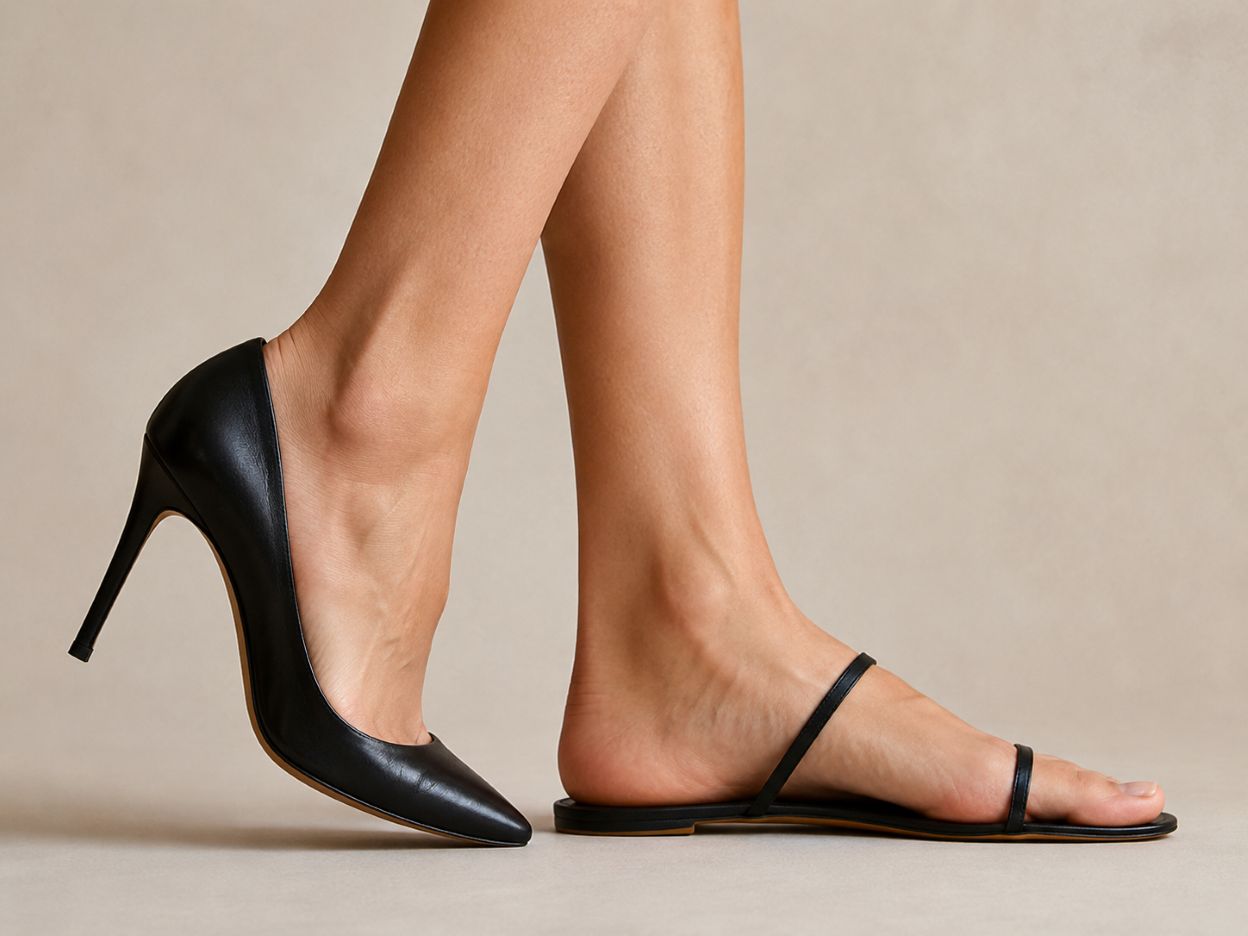
Regular high-heel wear can change how the calf, ankle, and foot work. A study published in The Journal of Experimental Biology found that habitual heel wearers had shorter muscle fibers in the medial calf and stiffer Achilles tendons than women who did not regularly wear heels. The researchers also reported a reduced active range of ankle movement. Heels keep the ankle in a more pointed position, so the calf and tendon repeatedly work at a shorter length.
That helps explain why some long-time heel wearers become curious about flatter options such as Women’s barefoot sandals (סנדלי ברפוט לנשים). A true zero-drop sole places the heel and forefoot at the same height. This removes the built-in heel lift, but it does not instantly undo years of adaptation. The calf, Achilles tendon, and foot may need time to adjust to a different position and loading pattern.
What Changes in the Calf and Achilles Tendon?
High heels hold the heel above the forefoot, keeping the calf muscle and tendon in a shortened position. Research published in The Journal of Experimental Biology found that habitual heel wearers had shorter gastrocnemius muscle fibers and greater Achilles tendon stiffness. The findings suggest that repeated heel use can gradually change how these tissues function.
Walking mechanics can change as well. Research in the Journal of Applied Physiology found that women who regularly wore high heels showed different calf muscle behavior and greater muscle activation while walking in heels. These changes indicate that the body can adapt to footwear that repeatedly places the ankle in the same raised position.
Pressure also moves toward the front of the foot as heel height increases. Research published in the Archives of Physical Medicine and Rehabilitation found that higher heels increased pressure under the forefoot during standing. The ankle also remained more pointed during walking. This greater load on the front of the foot may help explain why the ball of the foot can become sore or tired after long periods in heels.
Why Posture Changes Are More Complicated
High heels clearly change the position of the lower limbs, but their effect on posture is more complicated than it may seem. It is sometimes claimed that heels always increase the curve of the lower back. Research does not support such a simple conclusion.
Studies published in Gait & Posture have reported different responses among wearers. Some research found little change in the natural curve of the lower back, while changes were seen in pelvic position and movement. Other studies found differences in spinal curvature during walking in high heels compared with walking barefoot.
Earlier research has also shown that much of the body’s adjustment to heel height happens at the ankle and knee. Individual responses can vary depending on heel height, shoe design, walking habits, muscle flexibility, and the amount of time spent wearing elevated shoes.
What Changes When the Heel Returns to Ground Level?
A zero-drop sole removes the height difference between the heel and toes. Minimalist footwear often combines this level platform with a thinner and more flexible sole. An expert consensus published in the Journal of Foot and Ankle Research identified features such as low heel-to-toe drop, low sole thickness, flexibility, low weight, and limited motion-control features as common characteristics of minimalist footwear.
For someone accustomed to heels, the biggest immediate change is the position of the ankle. The heel is no longer raised above the toes. This means the calf and Achilles tendon are placed in a longer position than they experience while wearing heels.
That change may feel natural for some people. Others may notice tight calves, tired feet, or discomfort at first. The response depends partly on how often heels were worn and how much the muscles and tendons have adapted over time.
It is also important to remember that flat footwear is not automatically barefoot-style footwear. A conventional flat shoe may still have a narrow toe box, thick cushioning, or a stiff sole. These details matter because everyday fashion choices often influence the shoes people wear for work, social events, and daily routines. Zero drop simply means that the heel and forefoot sit at roughly the same height.
Do Flat Soles Help After Years in Heels?
Flat or zero-drop footwear may help some people become less dependent on an elevated heel. However, research does not show that one type of shoe is ideal for everyone. Changing footwear also changes the forces placed on muscles, tendons, joints, and bones.
A study published in Medicine & Science in Sports & Exercise examined runners who transitioned to minimalist shoes. Some participants developed increased signs of stress in the bones of the foot during the transition. The researchers recommended changing footwear gradually rather than making a sudden switch.
The study focused on running rather than everyday sandal use, so its findings should not be applied directly to casual walking. Still, it highlights an important principle. Tissues that have adapted to one type of footwear may need time to adjust when the loading pattern changes.
Gradual Change Matters Most
A practical approach is to start with short periods in lower or zero-drop footwear and increase wear gradually as comfort allows. This gives the calf muscles, Achilles tendon, and feet more time to adjust.
Persistent pain in the heel, calf, arch, or forefoot should not simply be ignored. A podiatrist, physiotherapist, or another qualified healthcare professional can assess whether footwear, muscle tightness, joint mobility, or another issue may be contributing to the problem.
Years of wearing heels can lead to measurable changes in the way the lower leg and foot function, but those changes are not identical for everyone. Flat and zero-drop soles place the foot on a more level surface, which may feel better for some wearers. The safest approach is to consider comfort, activity level, personal health, and gradual adjustment rather than expecting one type of footwear to reverse years of adaptation immediately.