Fashion

Beyond Rings and Necklaces: Personal Accessories Couples May Consider for a Nontraditional Wedding Look

beyond rings and necklace

Wedding accessories can change the character of formal clothing without requiring a different outfit. The Knot notes that couples can use earrings, hair pieces, shoes, cufflinks, and other details to make wedding clothing feel more individual. That can help when traditional suits, dresses, or formalwear feel right, but the finished look still needs a personal touch.

For couples drawn to silver-toned details, handcrafted sterling pieces can offer a more individualized option than familiar rings or necklaces. Rhino Grillz describes several custom .925 silver designs as handcrafted and made to fit from dental impressions, including open-face and solid styles. The Federal Trade Commission states that “sterling” and “sterling silver” refer to products containing 92.5 percent pure silver, while GIA notes that other metals are added to improve practicality for jewelry.

1. Personalized Cufflinks Can Carry a Small Story

Cufflinks can personalize formal tailoring without changing its overall shape. The Knot describes them as functional and decorative accessories for French-cuff shirts and suggests engraved initials as one way to add personality.

Couples might choose the same metal but different engravings, or use separate designs linked by one theme. A date, place, family reference, or small symbol can make the detail meaningful while keeping the outfit formal.

2. Hair Jewelry Can Add Detail Without a Necklace

Hair accessories work well for someone who wants detail near the face without adding another piece around the neckline. The Knot includes hairpins, clips, headbands, and related pieces among common wedding accessories.

A less traditional approach could use sculptural metal pins, geometric clips, vintage combs, or pieces that echo an accessory worn by a partner. The connection can be subtle rather than identical.

3. Custom Earrings Can Become the Main Jewelry Statement

Earrings can provide a clear focal point when clothing already has strong visual details. A custom pair can feel distinctive without requiring several other pieces.

The Knot advises considering an outfit’s color, style, and formality when choosing accessories. A dramatic earring may therefore work best when other jewelry stays restrained. Couples can also coordinate materials rather than designs, such as choosing silver-toned pieces in different shapes.

4. Engraved Pieces Add Meaning Quietly

Personalization does not have to be obvious to every guest. Engraved tie bars, bracelets, watches, lockets, or small metal accessories can carry private messages that the wearer may choose to keep discreet.

This can suit couples who want sentimental details without making everything match. The shared element might be a date, coordinates, phrase, or symbol rather than the accessory itself.

5. Decorative Footwear Can Shift the Mood

Shoes are practical, but they can also become one of the most expressive parts of a wedding outfit. The Knot includes shoes among the accessories that help complete wedding styling and recommends considering both personal style and comfort.

Options might include embroidered shoes, metallic loafers, decorated boots, custom sneakers, or footwear in a shared accent color. These choices can also complement timeless bridal fashion by adding personality without taking attention away from the overall wedding look. Because shoes sit away from the face and neckline, they can introduce an expressive detail without making the outfit feel crowded.

6. Removable Statement Accessories Can Create a Second Look

Some couples want a stronger change for portraits or the reception without changing clothes. Removable accessories make that easier. Brooches, detachable collars, decorative gloves, bold hair pieces, and temporary statement jewelry can be added or removed as the day changes. The Knot notes that changing accessories is one way to alter a wedding look without purchasing an entirely separate outfit.

Dental grillz are a more unconventional example. Rhino Grillz lists custom silver designs created from impressions, including open-face and solid options. The American Dental Association advises caution with oral jewelry. Its MouthHealthy guidance says removable grills should be cleaned daily, removed before eating, and discussed with a dentist because debris can collect between the accessory and the teeth.

How Can Two Looks Feel Connected Without Matching?

Couples do not need identical accessories to look coordinated. Repeating a material, finish, shape, engraving style, or accent color can create a clear connection while allowing each person to keep an individual style.

One person might wear silver cufflinks while the other chooses silver hair jewelry or earrings. Another pair might repeat a geometric motif across shoes and an engraved accessory. The relationship between the details matters more than making the items the same.

Choose Accessories That Still Feel Like You

Unconventional accessories work best when they extend a style that already feels natural to the wearer. A wedding can justify something special, but being unusual does not automatically make an accessory personal.

Couples may get a stronger result by starting with what they already wear and enjoy. From engraved details and expressive footwear to custom silver pieces, the best choices are the ones that still make sense after the wedding photos are taken. A distinctive accessory should feel like part of the person wearing it, rather than a novelty chosen only for the occasion.
By Silver Karen, ago
Fashion

Wedding Events in Simple and Eco-friendly Ways

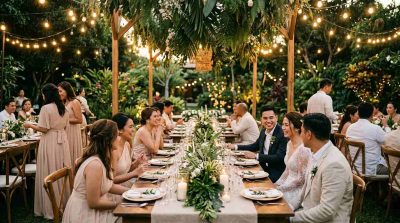
An elegant eco-friendly wedding reception with reusable floral arrangements, natural decorations, sustainable table settings, elegant wedding attirePlanning a big event like a wedding event can lead to substantial amounts of consumption and waste. Elegance and tradition are not sacrificed when couples choose a more environmentally friendly celebration. There are a number of small things that can be done at the planning stage. These will help to build a beautiful wedding without excessive waste.
Designing and Making More Sustainable Decorations

Here’s how:

Choose Reusable Decor

When wedding decorations are created for a single event, there can be a lot of waste. Other items such as reusable signs, fabric decorations, candles, vases and more can be reused or donated to another couple. Another option is hiring a wedding decorator that assists couples in achieving their desired look without breaking the bank.

Minimizing Paper and Food Waste

See the following:

1-Use Digital Communication When Appropriate

Wedding websites, digital invitations and electronic updates can help minimize paper usage for wedding communication. If couples prefer printed invitations, using responsibly sourced paper and only using items that are absolutely needed can help reduce the amount of paper used.

2-Plan Food Responsibly

Considerate guests’ estimates can help minimize excess food. Prevent food waste after the event. A negotiation between the couples and their caterers regarding any food that remains after the event may avoid the food wastage.

Conclusion

An elegant wedding is closely similar to eco-friendly events. Little details contribute to the big changes that can make a difference and more useful celebration.

By Earline Dwight, ago
Fashion

How Years of Wearing High Heels Affect Your Feet and What Flat Soles Can Change

Regular high-heel wear can change how the calf, ankle, and foot work. A study published in The Journal of Experimental Biology found that habitual heel wearers had shorter muscle fibers in the medial calf and stiffer Achilles tendons than women who did not regularly wear heels. The researchers also reported a reduced active range of ankle movement. Heels keep the ankle in a more pointed position, so the calf and tendon repeatedly work at a shorter length.

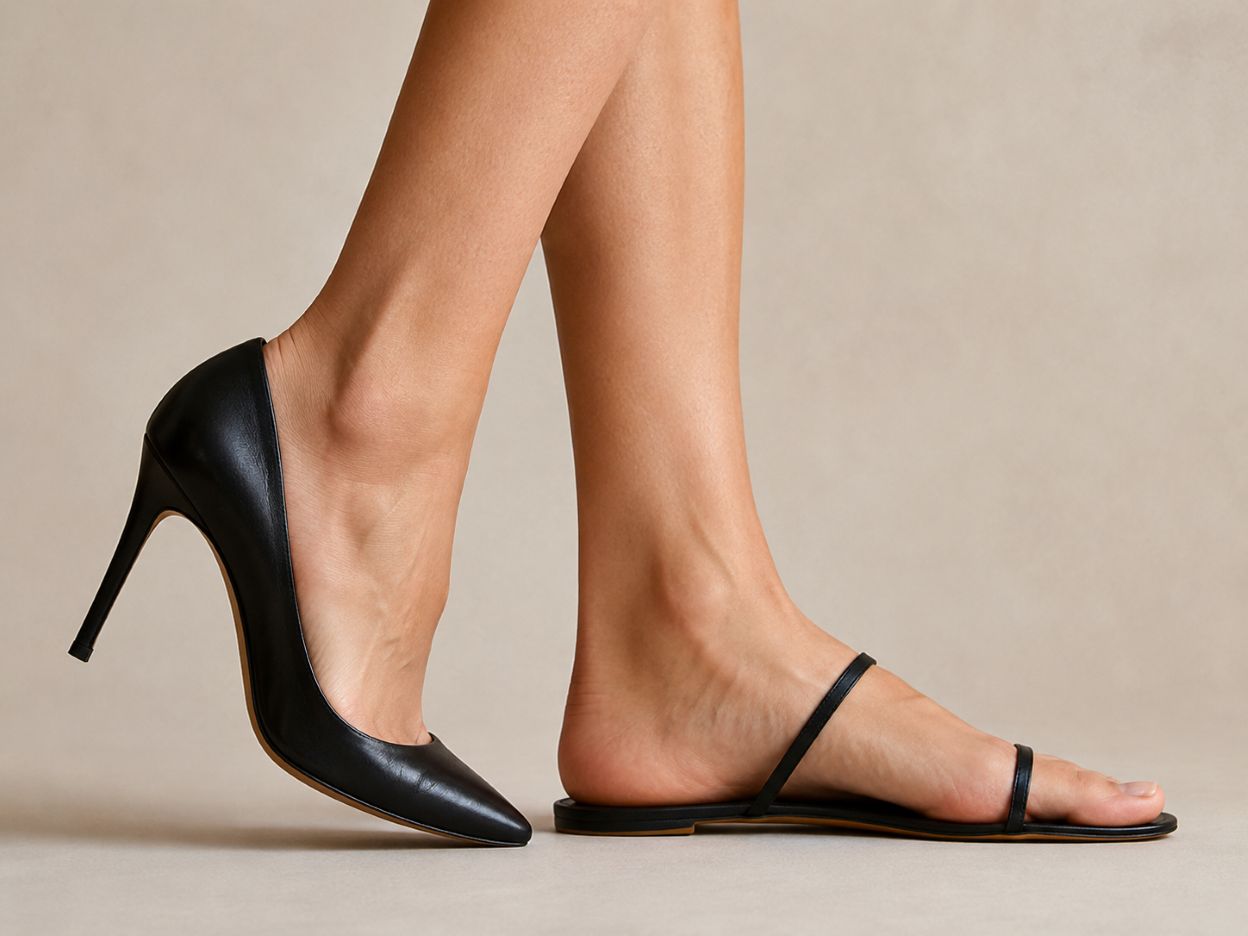
That helps explain why some long-time heel wearers become curious about flatter options such as Women’s barefoot sandals (סנדלי ברפוט לנשים). A true zero-drop sole places the heel and forefoot at the same height. This removes the built-in heel lift, but it does not instantly undo years of adaptation. The calf, Achilles tendon, and foot may need time to adjust to a different position and loading pattern.

high heels flat soles

What Changes in the Calf and Achilles Tendon?

High heels hold the heel above the forefoot, keeping the calf muscle and tendon in a shortened position. Research published in The Journal of Experimental Biology found that habitual heel wearers had shorter gastrocnemius muscle fibers and greater Achilles tendon stiffness. The findings suggest that repeated heel use can gradually change how these tissues function.

Walking mechanics can change as well. Research in the Journal of Applied Physiology found that women who regularly wore high heels showed different calf muscle behavior and greater muscle activation while walking in heels. These changes indicate that the body can adapt to footwear that repeatedly places the ankle in the same raised position.

Pressure also moves toward the front of the foot as heel height increases. Research published in the Archives of Physical Medicine and Rehabilitation found that higher heels increased pressure under the forefoot during standing. The ankle also remained more pointed during walking. This greater load on the front of the foot may help explain why the ball of the foot can become sore or tired after long periods in heels.

Why Posture Changes Are More Complicated

High heels clearly change the position of the lower limbs, but their effect on posture is more complicated than it may seem. It is sometimes claimed that heels always increase the curve of the lower back. Research does not support such a simple conclusion.

Studies published in Gait & Posture have reported different responses among wearers. Some research found little change in the natural curve of the lower back, while changes were seen in pelvic position and movement. Other studies found differences in spinal curvature during walking in high heels compared with walking barefoot.

Earlier research has also shown that much of the body’s adjustment to heel height happens at the ankle and knee. Individual responses can vary depending on heel height, shoe design, walking habits, muscle flexibility, and the amount of time spent wearing elevated shoes.

What Changes When the Heel Returns to Ground Level?

A zero-drop sole removes the height difference between the heel and toes. Minimalist footwear often combines this level platform with a thinner and more flexible sole. An expert consensus published in the Journal of Foot and Ankle Research identified features such as low heel-to-toe drop, low sole thickness, flexibility, low weight, and limited motion-control features as common characteristics of minimalist footwear.

For someone accustomed to heels, the biggest immediate change is the position of the ankle. The heel is no longer raised above the toes. This means the calf and Achilles tendon are placed in a longer position than they experience while wearing heels.

That change may feel natural for some people. Others may notice tight calves, tired feet, or discomfort at first. The response depends partly on how often heels were worn and how much the muscles and tendons have adapted over time.

It is also important to remember that flat footwear is not automatically barefoot-style footwear. A conventional flat shoe may still have a narrow toe box, thick cushioning, or a stiff sole. These details matter because everyday fashion choices often influence the shoes people wear for work, social events, and daily routines. Zero drop simply means that the heel and forefoot sit at roughly the same height.

Do Flat Soles Help After Years in Heels?

Flat or zero-drop footwear may help some people become less dependent on an elevated heel. However, research does not show that one type of shoe is ideal for everyone. Changing footwear also changes the forces placed on muscles, tendons, joints, and bones.

A study published in Medicine & Science in Sports & Exercise examined runners who transitioned to minimalist shoes. Some participants developed increased signs of stress in the bones of the foot during the transition. The researchers recommended changing footwear gradually rather than making a sudden switch.

The study focused on running rather than everyday sandal use, so its findings should not be applied directly to casual walking. Still, it highlights an important principle. Tissues that have adapted to one type of footwear may need time to adjust when the loading pattern changes.

Gradual Change Matters Most

A practical approach is to start with short periods in lower or zero-drop footwear and increase wear gradually as comfort allows. This gives the calf muscles, Achilles tendon, and feet more time to adjust.

Persistent pain in the heel, calf, arch, or forefoot should not simply be ignored. A podiatrist, physiotherapist, or another qualified healthcare professional can assess whether footwear, muscle tightness, joint mobility, or another issue may be contributing to the problem.

Years of wearing heels can lead to measurable changes in the way the lower leg and foot function, but those changes are not identical for everyone. Flat and zero-drop soles place the foot on a more level surface, which may feel better for some wearers. The safest approach is to consider comfort, activity level, personal health, and gradual adjustment rather than expecting one type of footwear to reverse years of adaptation immediately.

By Silver Karen, ago
Fashion

Why Branded Photo Backdrops Make Sense for Weddings and Fashion Events

Reviewing the fashion beauty backdrop

Fashion shows, weddings, and beauty events are designed to be seen as well as experienced. Clothing, décor, lighting, flowers, makeup, and venue styling all contribute to a visual story. A photo backdrop gives that story a clear setting, creating a dedicated place where guests, models, couples, and event partners can be photographed without unrelated details distracting from the occasion.

For planners working in busy venues, a custom backdrop can also bring visual order to a room. Guidance on Step and Repeat NYC explains how repeating marks remain visible across different camera crops and framing styles. That consistency is useful at events where professional photographers, guests, and content creators may all capture the same scene differently.

A Natural Extension of Fashion Event Styling

Fashion events often move between presentation and social interaction.

A runway may be the main attraction, but arrivals, interviews, backstage moments, and post-show conversations also shape how the event is remembered. A dedicated photo wall creates a visual link between these separate parts of the program.

For a designer presentation, the background might repeat a fashion label’s mark alongside those of production partners. At a beauty launch, it could use campaign colors or a restrained pattern inspired by the product packaging. The goal is not to fill every empty space with branding. It is to create a recognizable setting that feels connected to the collection, season, or creative theme.

This approach can also help photographers work more efficiently. Instead of searching for a clean wall or moving distracting objects out of a frame, they have a prepared location with planned lighting and enough room for individual or group portraits. Interviews, designer photographs, and guest arrivals can then share a consistent visual language.

A Flexible Addition to Wedding Design

Weddings use photo backdrops differently because the emphasis is usually personal rather than commercial. Initials, a family name, a wedding date, botanical artwork, or a motif from the invitations can replace rows of business logos. The repeating format can still be used, but it may be softened through lighter colors, generous spacing, or decorative details.

A backdrop can help connect the ceremony and reception when the two spaces have different architectural styles.

For example, a couple may carry the same monogram from printed stationery to the seating plan and photo area. This creates continuity without requiring every decorative element to match exactly.

It also gives guests a clear place to gather for portraits. Wedding photographers must capture formal family groups, candid interactions, full-length outfits, and smaller combinations of guests. A designated setting can reduce interruptions around the dance floor, dining tables, or ceremony decorations while giving people time to pose comfortably.

Supporting the Guest Experience

A photo area can become part of the event’s flow rather than a display placed against an unused wall. Near an entrance, it can serve as an arrival point. Beside a reception lounge, it can encourage informal portraits during quieter moments. At a fashion party, it may provide a transition between registration and the main presentation.

Placement matters because a backdrop that blocks a corridor or creates a long queue can work against the experience. Planners should account for the frame, lighting stands, photographer position, full-length clothing, and waiting guests. Evening gowns, bridal trains, and structured fashion pieces require more floor space than ordinary standing portraits.

The setting should also feel welcoming to a varied group. A background that works with pale bridalwear, dark suits, bright evening clothing, and different skin tones will be more useful than one designed around a single outfit. Canon Europe notes that diffused light can preserve detail in highlights and shadows while producing more natural-looking skin tones. This makes soft, controlled lighting a sensible choice for mixed groups.

Making Event Images More Consistent

Event photographs rarely remain in one format. A fashion editor may use a horizontal image, while a guest posts a vertical version on social media. A wedding album may include full-length portraits beside close crops. Repeated graphics increase the chance that a complete monogram, symbol, or event mark remains visible across these variations.

That does not mean every backdrop needs dense branding. Large logos may be cut off in close portraits, while very small marks can disappear in wider photographs. Balanced spacing allows the background to remain recognizable without drawing attention away from faces, garments, makeup, or bridal details.

Color consistency is another consideration. Adobe explains that RGB is used for screen display, while CMYK is intended for process-color printing. Since the available color range varies with the press and printing conditions, planners should request a proof when a particular wedding shade or fashion brand color is important.

READ ALSO: Using Step & Repeat Banners for Fashion Shows, Bridal Events & Beauty Launches in NYC

A Practical Part of Event Planning

A branded photo backdrop makes sense when it has a defined purpose within the event. It can connect visual details, support photographers, organize guest movement, acknowledge partners, and provide a consistent setting for images. It should be planned alongside lighting, décor, floor layout, and the photography schedule rather than added at the last minute.

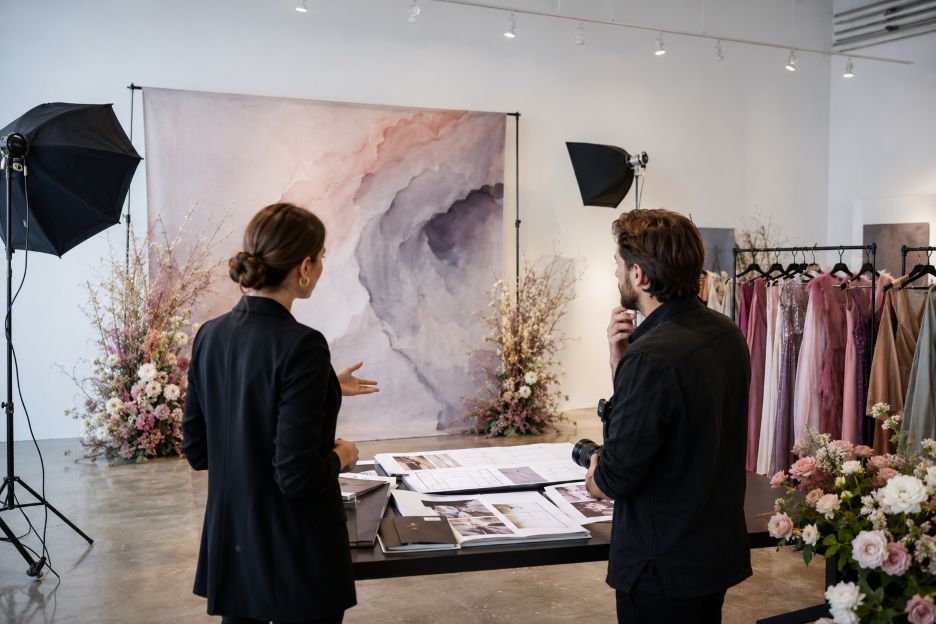
Before approval, the event team can photograph a sample area with a professional camera and several smartphones. Testing light and dark outfits, individual portraits, couples, and groups reveals problems with glare, shadows, cropping, or scale. When those details are resolved early, the finished backdrop becomes a natural part of the wedding or fashion environment, giving guests a polished place to record an occasion already built around memorable visual moments.ted photo backdrop before a combined fashion and beauty celebration, lighting stands, venue plans, clothing racks, and floral styling visible nearby, polished gallery interior, soft neutral lighting, realistic editorial composition, no logos or readable text.

By Silver Karen, ago
Beauty

Printed Backdrops or Digital Photo Walls: Which Works Better for Stylish Celebrations?

Photographic backgrounds influence how guests, clothing, décor, and event branding appear in finished images. For wedding planners, fashion teams, and beauty event organizers, the choice often comes down to a printed backdrop or a digital photo wall. Both can create a polished focal point, but they behave differently under event lighting, camera flash, and changing production demands.

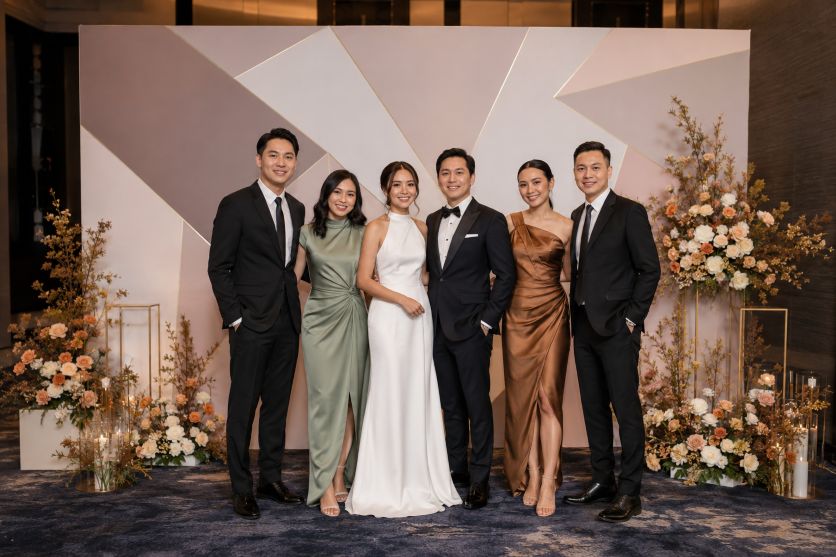
Printed installations offer a familiar solution for events that need a controlled, repeatable visual identity. Services involving step and repeat printing NYC fit naturally into wedding receptions, fashion launches, and beauty events where guests will be photographed throughout the program. Once the artwork, dimensions, material, and support system are approved, the background remains visually consistent from the first arrival to the final portrait.

Elegant Wedding Portraits by Geometric Backdrop

The Case for Printed Backdrops

A printed backdrop has a predictable appearance. Its graphics do not change unexpectedly, and it does not depend on media servers, signal cables, or content operators during the celebration. Setup usually involves assembling a frame, attaching the printed material, smoothing the surface, and checking its position against the camera angle.

This simplicity can be valuable during weddings, where vendors must coordinate floral arrangements, tables, entertainment, and photography within a limited installation window. At fashion and beauty launches, a fixed pattern can also keep sponsor marks or decorative motifs in approximately the same position across hundreds of photographs.

Color preparation still matters. Adobe explains that monitor and printer profiles translate colors between different devices. A design viewed on a bright screen may therefore look different when printed unless the production team uses suitable profiles, proofs the artwork, and considers the venue’s ambient light.

Material choice affects photographic performance as well. A matte or low-sheen surface generally gives planners more control than a highly reflective finish when direct flash is expected. Nikon notes in its photography guidance that reflective surfaces can interact poorly with flash and create unnatural results. A test photograph can reveal bright spots, wrinkles, or distracting shadows before guests arrive.

The Argument for Digital Photo Walls

Digital walls provide something print cannot deliver: movement. They can display animated patterns, countdowns, color transitions, guest names, or content that changes between different parts of the event. A wedding wall might shift from a restrained arrival design to a more energetic reception sequence. A beauty launch could rotate product-inspired colors, while a fashion event could coordinate visuals with individual collections.

Personalization also creates opportunities for participation. Guests may see their names, selected photographs, or event-themed graphics appear on screen. This can make the photo area feel like an experience instead of a fixed background. However, changing content requires more preparation. Organizers must develop media in the correct size and format, arrange playback equipment, test connections, and decide who will control the display.

Cameras can expose technical issues that are difficult to notice with the eye alone. ARRI explains that LED walls can produce moiré when the regular arrangement of screen pixels interacts with a camera sensor. Lens choice, focus, aperture, camera distance, and the type of display can all influence the effect.

Electronic displays may also create bands or flicker at certain shutter settings. Guidance from Sony shows that artificial light sources can cause horizontal banding and that camera shutter settings may reduce the problem. Event photographers should therefore test still photographs and video clips using the actual screen content planned for the celebration.

Beauty Lighting and Camera Flash

Beauty lighting is designed to render faces evenly, but the background must remain balanced with the subject. A printed surface reflects the light placed around it, so photographers can adjust lamp positions, flash power, and subject distance. If the print is too bright or glossy, highlights may become distracting. If it is too dark, branding and decorative details may disappear behind the guests.

A digital wall produces its own light. This can add rich color and visual depth, yet an overly bright display may compete with skin tones or influence the camera’s exposure. Lowering screen brightness, choosing less saturated content, and leaving space between guests and the wall can help. Testing should include pale dresses, dark suits, reflective fabrics, and different skin tones because one exposure may not suit every subject.

Finding a Balanced Choice

Neither option is universally better. Printed backdrops suit venues that need straightforward installation, consistent photographs, limited technical supervision, and a clearly controlled budget. They are especially practical in compact reception rooms or busy launch spaces where equipment depth and electrical access are restricted. For garden venues, principles of outdoor wedding space planning can help organizers consider sunlight, guest movement, landscaping, weather protection, and suitable photography angles before positioning the backdrop.

Digital walls make more sense when changing visuals and guest interaction are central to the event concept. They require adequate space, reliable power, technical support, and a photography plan that accounts for brightness, flicker, and pixel patterns. Rental, content production, staffing, and backup equipment should all be considered when comparing costs.

The final decision should follow the desired photographic result. Choose print when consistency and operational simplicity carry the most weight. Choose digital when animation and personalization justify the additional production work. For some stylish celebrations, a restrained printed portrait area paired with digital displays elsewhere provides the clearest balance between dependable photography and a lively guest experience.

By Silver Karen, ago
Wedding

Planning Elegant Outdoor Wedding Venues with Modern Architectural Features

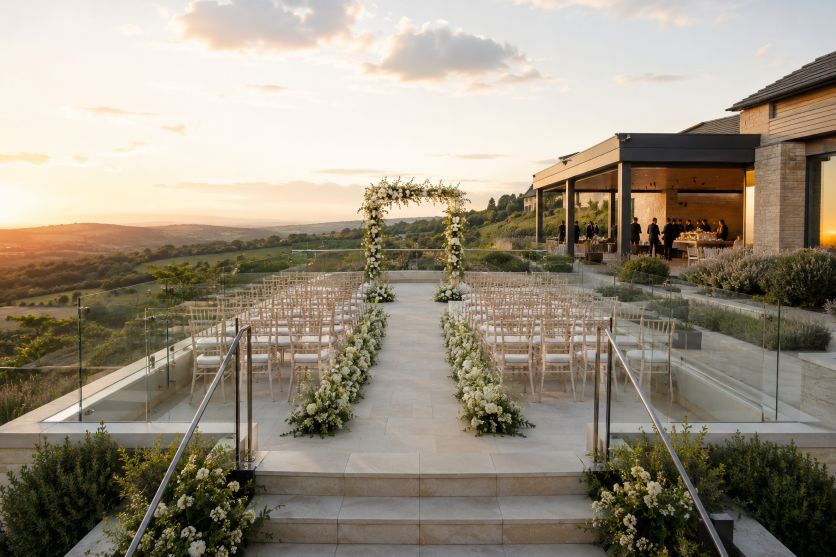
Golden Hour Glass Terrace Wedding

Outdoor wedding venues must balance visual character with practical requirements such as safe access, weather protection and crowd movement. For venue owners, planners and couples, the challenge is to create a memorable setting without allowing decorative choices to interfere with guest comfort or safety.

Elevated terraces, balconies and rooftop spaces can provide impressive ceremony backdrops, but exposed edges require careful treatment. Understanding glass balustrade building regs early in the design process helps project teams coordinate appearance, structural performance and legal compliance before construction begins.

Step 1: Define the Venue’s Visual Direction

Start by identifying the atmosphere the venue should create. A country estate may combine stone paving and natural planting with contemporary glazed features, while an urban rooftop might favour clean lines, pale flooring and discreet metal details. A limited material palette usually creates a more coherent setting for ceremonies, photographs and receptions.

Consider how the space will look throughout the day. Glass guarding can preserve views across gardens, water or surrounding countryside, while transparent panels allow daylight to reach adjoining areas. Lighting should support the architecture after sunset without producing glare on glazing or leaving stairs and level changes difficult to see.

Step 2: Plan the Guest Journey

Map the route from arrival to departure before deciding where decorative structures will stand. Guests may need to move between parking areas, ceremony seating, dining spaces, toilets and dance areas. Suppliers also require separate access for deliveries, catering equipment and waste removal.

The Health and Safety Executive advises event organisers to consider ground conditions, site topography and the load-bearing capacity of areas supporting temporary structures. This is particularly relevant when installing marquees, stages, raised seating or substantial floral displays.

Accessible movement should form part of the original layout. Building laws in England in reference to Access to and use of buildings: Approved Document M provides guidance for meeting access requirements in England, including reasonable provision for people to enter and use buildings and their facilities. Step-free routes, suitable surfaces and clearly identified accessible toilets can make the celebration more comfortable for a wider range of guests.

Step 3: Address Elevated Areas Carefully

Terraces and balconies attract guests because they offer views and natural gathering points. They can also become crowded during drinks receptions and photographs. Furniture, planters and portable heaters should therefore be arranged so they do not narrow circulation routes or encourage people to climb near an exposed edge.

Building laws in England in reference to Protection from falling, collision and impact: Approved Document K covers protection from falling, collision and impact in and around buildings in England. Its guidance addresses stairs, ramps, guarding and barriers. The correct solution depends on factors such as the location, intended use, fall height, loading and surrounding construction, so a qualified designer should assess each project individually.

A compliant balustrade is more than a row of attractive glass panels. The glass specification, posts, channels, handrails, fixings and supporting substrate work together as a system. Structural calculations and installation details should reflect the expected use of the venue, including the possibility of groups gathering beside the barrier.

Step 4: Integrate Crowd and Emergency Planning

Elegant layouts still need clear escape routes and sensible capacity limits. Thoughtfully positioned digital signage in modern wedding venues can guide guests towards reception areas, toilets and other facilities while complementing the event design. Ceremony chairs, photo booths, service stations, display screens and decorative arches must remain clear of exits and essential circulation routes.

Guidance from the Health and Safety Executive explains that event barriers can guide crowds, reduce overcrowding and separate people from hazards. Permanent architectural guarding and temporary crowd-control barriers perform different jobs, so one should not be treated automatically as a substitute for the other.

Step 5: Prepare for Changing Weather

Outdoor design should include a realistic wet-weather plan. Covered areas, slip-resistant routes, secure furniture and sheltered waiting points allow the venue to respond without disrupting the entire event. Drainage also deserves attention around terraces, steps and entrances where standing water could create difficulties.

The Met Office issues warnings for conditions including wind, rain, thunderstorms, lightning, fog and extreme heat. Venue teams should monitor forecasts, establish decision points and document when exposed spaces, temporary structures or loose decorations will be closed or removed.

Step 6: Confirm Compliance Before Opening

Bring the architect, structural engineer, building-control professional, installer and event operator into the process before final specifications are approved. Requirements vary across UK jurisdictions, and planning permission, listed-building consent or other approvals may apply alongside building standards.

Request calculations, product specifications, installation records and inspection information for the completed guarding system. Regular checks should then look for loose fixings, damaged panels, corrosion or changes to adjacent flooring. Records make it easier to address defects before guests enter the space.

Creating a Venue That Lasts

A successful outdoor wedding venue feels effortless because its practical details have been resolved quietly. When views, accessible routes, weather planning and protective barriers are considered together, modern architecture can support the celebration rather than compete with it. Early professional input gives owners greater freedom to build an elegant setting that remains functional as events and expectations evolve.

By Silver Karen, ago
𐌢